
Account
Pictures
ITR 2015


Discussions
Adding Electric Assistance.
We're thinking of adding some electric assistance to our Dawes Double Edge Tandem as our advancing years are making the Devon hills seem steeper!
Does anyone have any experience or recommendations of a system which can be retro fitted please?
Thanks in advance,
Brian Hampson.
nothing but praise for it.
Hi Brian - we had a Pendix assist added to ours by Thorn and have been on a number of fully loaded tours since with good results. The Pendix isn't the most economic and rather than have bells and whistles it just concentrates on doing one thing really well.
https://www.sjscycles.co.uk/ebike/pendix-edrive-500-for-tandem/
Hi Brian We added a Cytronics system, its simple but think it more suited to a solo bike than a Tandem not enough range, I have falled out of favour with them..... added a non Cytronic battery !!
Hi Brian,
I fitted a Tongsheng torque sensing mid-drive kit to our tandem. It works great and has good range with a 960Wh battery. Our tandem is a recumbent with the 14spd Rohloff.
Happy to answer any questions.
Woosh bikes will also fit there kits to your own bike if you ask them
but obviously you have to get your bike too them
I had one fitted by them and can recommend them
At the more basic end, we fitted a Woosh XF07 front drive kit to our Viking tandem some years ago. We would have liked more power, but nothing with more oomph but legal was available at the time. The power has been enough for shortish rides around Winchester, definitely would not have been enough for hiller territory.
We very briefly considered Cytronex, especially as they are local. BUT it would have been twice the cost, a smaller battery, and probably a fraction less power. Also, it would have locked us in to various spares.
We've now downgraded to a 2nd hand electric Ecosmo as I was having difficulty mounting the crossbar on the Viking. It suits us very well, but I wouldn't recommend it for rides over 10 ot maybe 20 miles or so.
Definitely recommend Woosh.
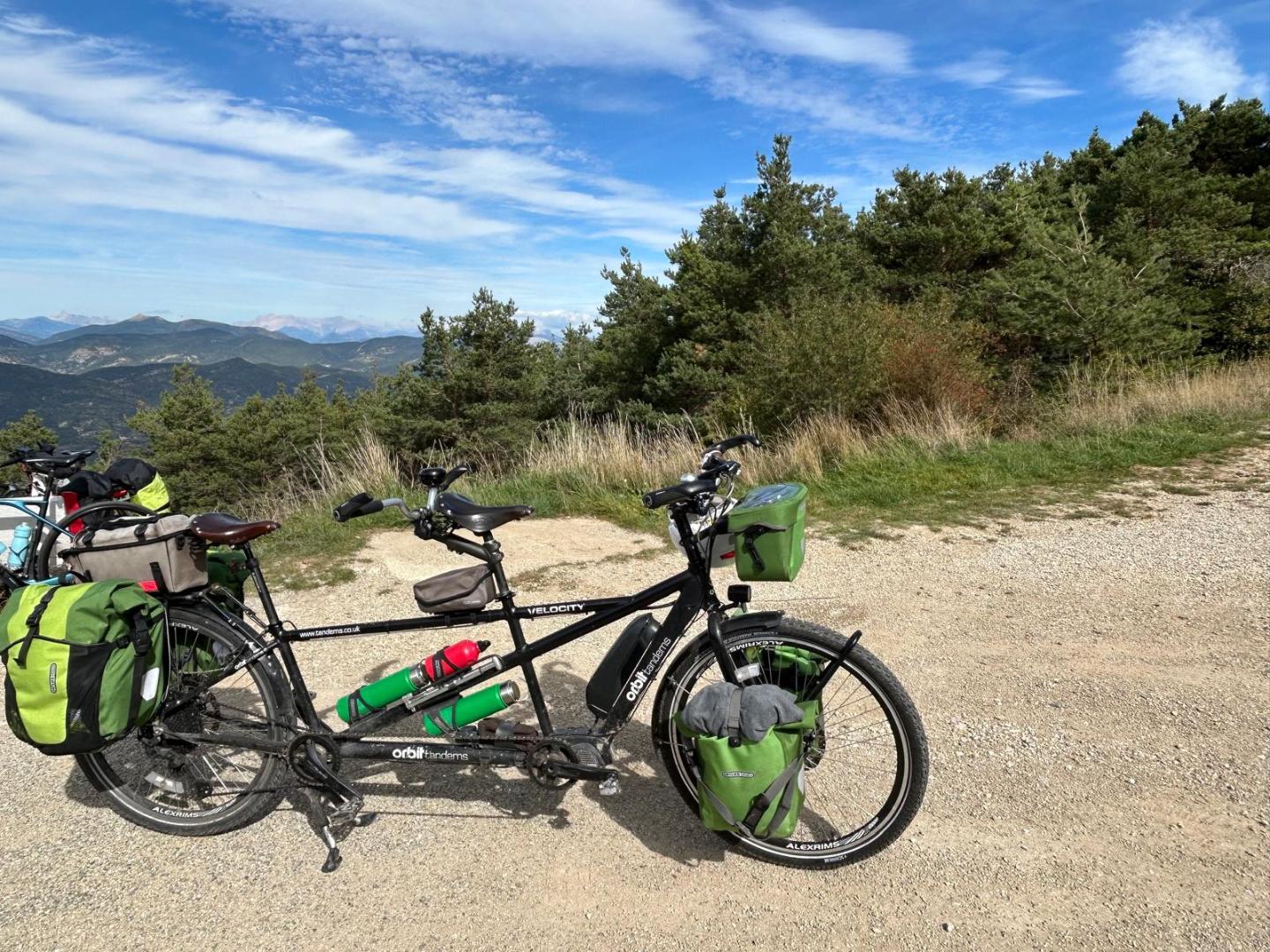
I'd tend to agree with Simon. The retro-fit kits/parts are okay to a point, as long as you are careful with the selection of motor/battery/controller, but in our experience fall a long way short of systems like Bosch, Shimano Steps which are carefully engineering into the machine by the likes of JD Tandems, Moustache etc.
We had a day testing three different tandems (and battery/motor setups) at JD Tandems, including one with the Pendix after-market kit. The Pendix was a very poor relation to the Shimano and Bosch systems. The Pendix was under-powered, slow to react to changes in pedal pressure, and needed a grope down onto the top of the battery to change its assistance level.
We opted for the Bosch-equipped Moustache because of the Bosch motor - it was seamless, like having Chris Hoy as a stoker... oh, and we couldn't get on with pedals out-of-sync so that ruled out JDs own Orbit models. Until Ruth at JDs spills the beans on their new model we're happy with the Moustache.
A couple of years later, feeling guilty about our Cannondale Road tandem being unused, I fitted a Bafang kit to it. Took a lot of research to make sure I wasn't buying dodgy kit, except it felt like I was buying the least dodgy kit (it's a minefield), and it's works okay, but nowhere near as well as the Bosch-equipped Moustache. It's given new life to the Cannondale, but we've hardly ridden it, the Moustache is the default choice.
So, given the choice, I'd invest the money and try and obtain a Bosch or Shimano equipped tandem rather than an after-market kit.
We fitted a woosh rear wheel kit with a rack mounted battery. Always knew there would be compromise somewhere, and it was in the rim. Initially we got it trued up as we had some loose spokes. It came back very tight, possibly too much as not long after I noticed splits were developing where the spokes enter the rim (16 out of 36).
We bought a new rim,ryde sputnik and had the motor built into it by a local builder. All ok for a while then the eyelets started pulling out of the rim. Back to the drawing board.
I spoke with Ruth at Orbit who told me there was a different Ryde rim that John recommended for a tandem wheel. Ryde Andra. And would we like John to build it up for us which I thought was a lovely offer to make
The motor was duly posted up to Yorkshire and John rebuilt the wheel for us then we took"Peggy" up for a service and to have the wheel fitted.
We've done about 500 miles since then and all good.
That's it's last chance, next time I think we'll be heading back up to Yorkshire. We had a test ride on an electric orbit when we went up to collect the wheel and were very impressed with it.
That said, the kit was about£600 when we bought it so much less than a new electric one and probably spent a couple of hundred on the rebuilds but it has brought the pleasure back to our riding. We live at the top of a hill. We still get out of breath by the top but now we can head straight home and not wonder whether we should be heading to A&E
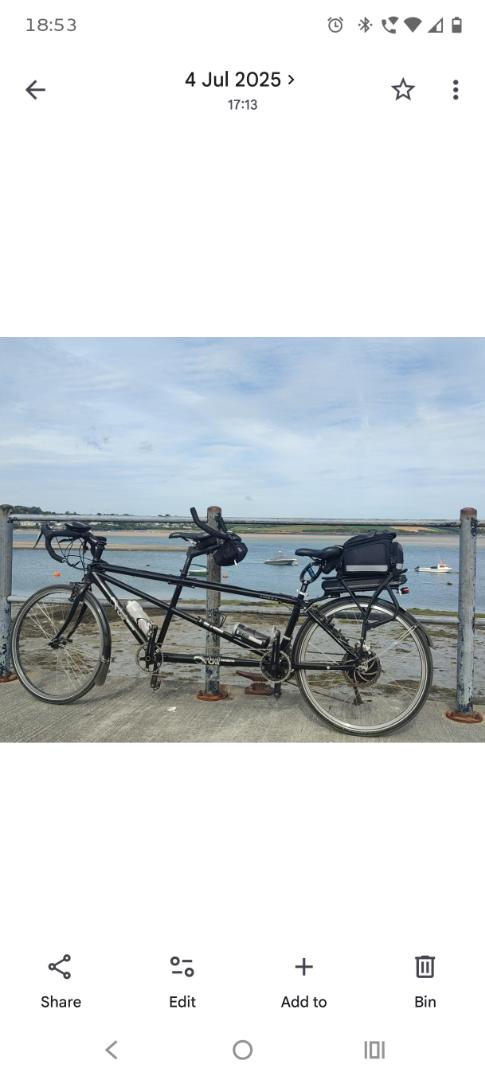
The opinions expressed in this thread are all valid and this type of debate would be better conducted face-to-face over a pint rather than on a forum! I honestly don’t think there is a right or wrong answer to kit built versus Bosch / Shimano etc.
In contrast to David’s experience above, I was pleasantly surprised at how good our home brewed conversions were in comparison to factory e-bikes. The factory e-bikes are definitely more polished but having tried a few, the differences were much smaller than I had anticipated. I reckon our kits give us about 90% of the factory bikes performance. I do completely agree with him that it is better if you understand a fair bit about motor/battery/controller/PAS type and so on. For instance, what would you choose: Pedal Assist mode - cadence or torque sensing? Controller – current control or speed control? And so on …...
The Moustache was probably top of our list when we started to consider an e-tandem. I’ve lost about 2” in height as I’ve aged and Ruth at JD Tandems thought I might now find the Moustache bottom bracket slightly too high. I’d probably pick a Bosch motor if I did go for a factory bike. My arthritic digits mean that I need wireless shifting for my right hand too.
BUT – I am an inveterate tinkerer and am happy to spend a lot of time investigating options, then putting together what appeals to me and my use-case.
Our Orbit has a Woosh rear hub motor designed for a cargo bike, so plenty of torque. However, the supplied rim & spokes are not really up to tandem use and after trying a few build variations, I ended up rebuilding it with a Ryde Sputnik rim and Sapim Strong spokes laced as a single cross, all spoke elbows out and with minimal dishing. In this form it has been faultless for about 5,000 miles now. The Canadian ‘Grin’ web-site has a good video on building up motor wheels.
For my Orbit build, I wanted to retain my triple chainrings and my close ratio 10 speed cassette, so that ruled out a mid-drive as most can only allow a single chainring. The hub motor is also independent of the normal driveline so if one or other fails, you still have options. When my wireless shifter failed on a ride, I was able to set the rear derailleur to the middle of the cassette whilst still having my three chainrings available. A bit of a bodge, but it gave me a three speed bike plus 5 assist levels on the (cadence sensing/speed control) motor, so I completed my trip with minimal hassle.
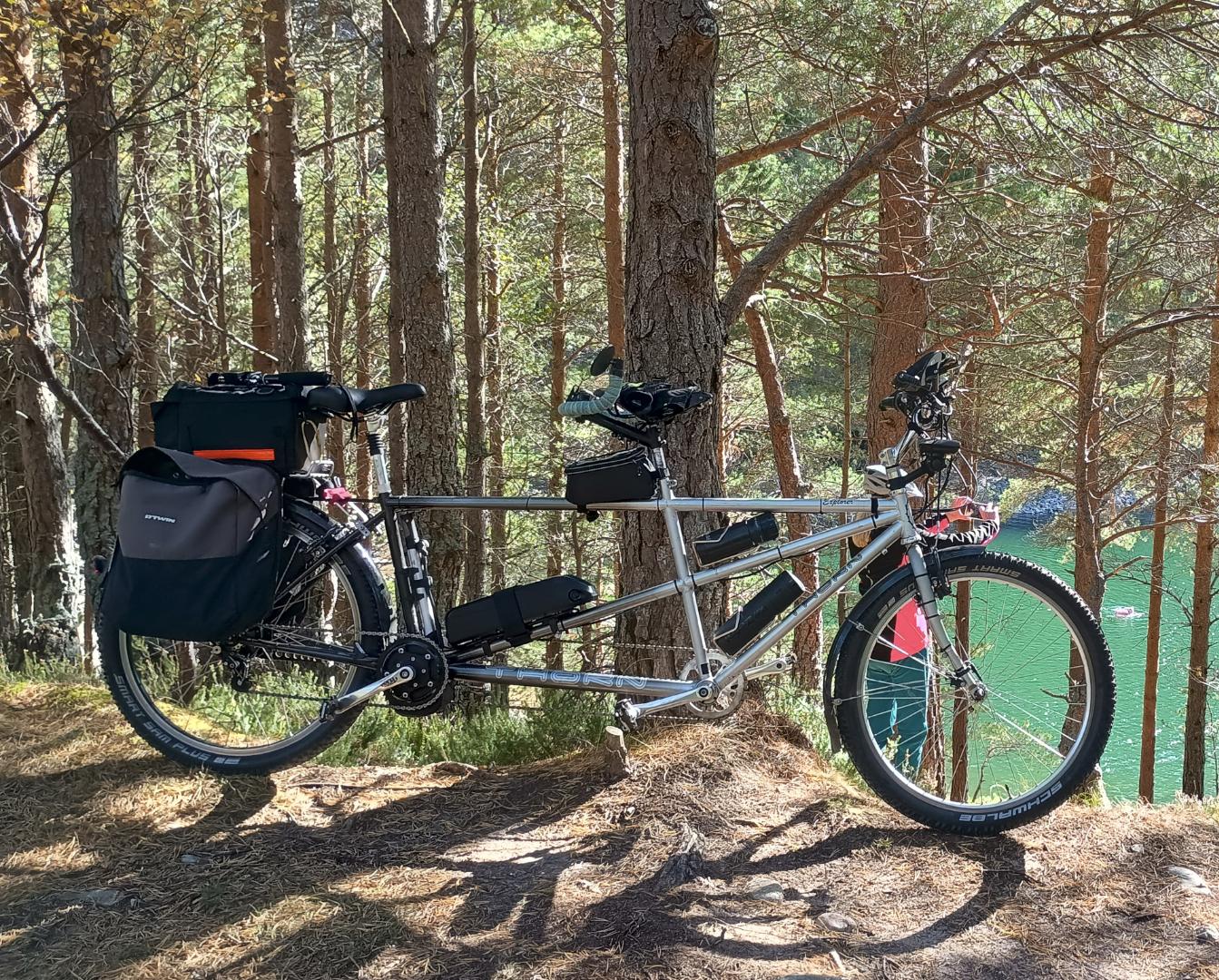
Our Thorn has a Rohloff speedhub with a Tongshen TSDZ2B mid-drive conversion. This is a pretty cheap (and slightly nasty build quality) motor, but it works surprisingly well with the Rohloff. I didn’t rate too highly when originally installed, but I have since flashed the motor with Open Source firmware (OSF), added additonal bearings to both sides of the axle and fitted additional cooling mods. The OSF allows for an awful lot of customisation and can make a big difference to the responsiveness of the motor. Our Thorn has quite wide MTB type tyres and can cope with (mild) off road use such as forest trails. The torque sensing Tongshen / Rohloff combo is excellent for this and has coped well with some very steep climbs. It doesn’t have the ‘oomph’ of the Orbit hub motor on the road, but the gear range of the Rohloff allows it to work efficiently at low speed.
My biggest gripe against factory e-bikes is that you are then completely locked into that manufacturer for spares / repair and that sticks in my throat a bit. As an example, a replacement Bosch battery is roughly twice the cost of a good quality generic. That said, I would not cut off my nose to spite my face and if I really wanted something like a Moustache, then I’d get one. My own experience is that my kit bikes are almost as good as factory built but have readily available, sensibly priced parts.
I didn’t intend to ramble on for so long, but in summary I think my view would be that if you are at all handy as a spanner twiddler, then a kit is a decent choice. If you want to just get a bike and ride, a factory built one would be the way to go. I’d probably pick a Bosch motor. One thing is for sure, you’ll thoroughly enjoy e-assist and will use your tandem more, go further and faster!
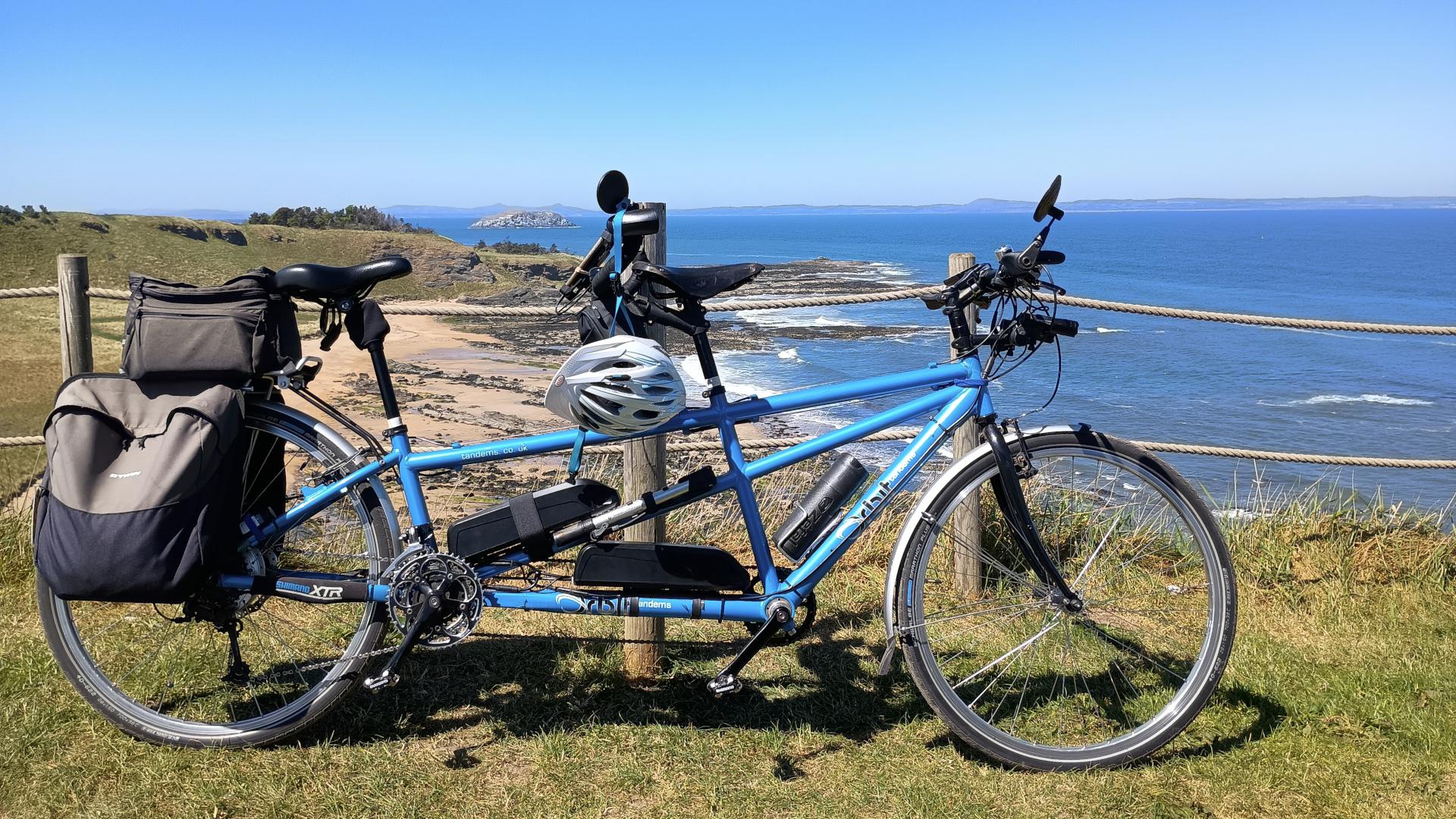
All very good comment Lawrence. A three pint conversation!
Rohloff + high quality drive = holy grail AFIAK. particularly if you could get different sized tandems like the Thorn range.
the market isn't really big enough for that sadly.
Yes there is easily enough material to assess and discuss over a 'three pinter' :) The debate between mid-drive versus hub drive would take another three pints, as would Rohloff versus derailleur!
Another couple of points make about conversions. I would strongly advise going for a 48 volt system over a 36 volt. You get about 30% more torque from a 48 volt installation and that matters on a tandem. In terms of fitting a mid-drive, one of the other points to consider is that the motor will hang lower on the frame of a tandem because the boom tube means the motor can't be located up against the down tube, where it would normally fit on a solo. Not a big deal, but worth considering. The small Tongshen motor isn't too obtrusive on our Thorn - see photo.
The newer Tongshen TSDZ8 motor apparently addresses all the design weaknesses of the TSDZ2B model I have on the Thorn. It is bigger, heavier and more powerful too - but still legal. I was happy to go with the little TSDZ2B installation and it has been great. I may yet try out a TSDZ8, but for the moment the TSDZ2B does all we need.
One extra point from experience with our (Woosh) front conversion, but applies more generally. People don't mostly recommend front wheel conversions for ebikes because they can slip/scud on steep hills with loose surface, and because they can affect the steering. The different weight distribution of the tandem makes these downsides much less important. Indeed, the front wheel drive often helped us on slippery uphill grass surfaces. It effectively gives two wheel drive; quite often we would get back wheel slippage (Marathon Plus tour tyres) and be kept moving because we still had front wheel grip.
And of course front wheel drive leaves you completely free to use any normal gearing.
Hello Brian
You can see that there is a lot of info out there and 18 months ago I went through this same maze of options to move to electric assistance. In the end, for us, it came down to cost. We have a Dawes Duet tandem that we bought, second hand, for £250 - virtually as new! It was to replace a stolen Thorn, and, as we now don't do heavy touring and ride generally less than 50 miles a day I baulked at spending £4k + on a new job and even the £2k I was quoted for a Pendix conversation (which we knew to be a very good system) brought out the miser in me!
So we went with a front wheel set up from Woosh bikes with a 36v 20ah frame mounted battery. This was something I could do myself. The cost (June '24) - just under £600
There were a couple of issues with the set up. The main being that the first wheel motor failed within a few miles. Woosh dealt with it very well and immediately sent me a another and no cost to return the faulty one. You also have to ask for an extension section to the standard cable from the motor to the battery because it's on a tandem. I mounted our battery in the rear frame triangle - losing one bottle carrier. The battery carrier utilises the two bottle carrier screws plus you have to drill and fit a third. This isn't difficult but the recommended drill size was too big for the insert. Another minor mod was required to the tang on the drop out in the forks. On one side it slightly fouled the locking washer on the motor axle preventing it sitting completely flat against the fork - a very minor mod but most important to get right.
I went for a front drive because I didn't want to lose our super strong 48 spoke rear wheel .The Woosh motor comes in a 36 spoke wheel. It's fair to say that the standard wheel isn't world class and Woosh recommended I checked spoke tension after a few runs. At first the wheel, although very true, clicked and ticked a lot! I did snug up a few spokes and it slowly settled and now runs fine but I do keep an eye on it. We carry our tandem across the rear of our motorhome, this requires both wheels being removed and the simple plug disconnect to the motor makes this easy. It also allows me to keep and eye on both the spokes and the drop out. Why the drop out? Well, when I was researching someone had experienced the torque of the motor opening up the drop outs on their bike! The design of those on our Dawes are very different from the ones he showed and there is no sign of any opening up with ours. Indeed it seems very unlikely to happen with ours. However, as I remove the front wheel regularly I can keep an eye on things.
I'm pretty competent with practical tasks but I would say it was very straightforward and not beyond anyone with basic abilities.
We've now done 1000 miles with no issues and it's really a game changer for us. It's enabled us to carry on actually enjoying the rides and also not being afraid of a trip to the Peak district or Wales. Range? Can't say, everyone is different, different strength, weight etc. We've never got anywhere near a flat battery but that's doing 50 miles trips in Suffolk! Around here we'd easily do 100+ miles. Part of the reason I can't tell you about range is because we'll do several short trips over a period - say 28 then 18 then 25 then a little 10 miles say without charging the battery. Then, with a couple of the green lights now out, I'll charge it. More diligent recorders would have a better idea. Suffice to say I'm impressed with the range. I'm less impressed with the charger. By rights the red light should go green when charged - it did it once, never since. Research on line shows this is a common issue with these chargers.
Safety issues: well there is a learning curve with having the motor. We've never suffered slip or anything but we only ride tarmac or maybe gravel. Coming to junctions requires the stoker to ease off as a slight rotation of the crank will activate the drive when you may be looking to stop! I think the torque available actually makes crossing junctions safer. Tandems don't do quick acceleration (well ours won't!) and I find slipping the power from the baseline setting 1 (barely there but helpful) to 2 really makes a difference. Of the 5 settings we have yet to go beyond 3 other than to see "what'll it do mister?"
All in all we're very happy with it. 1000 miles and 18 months isn't a great test but it's working for us so far.
Good luck wandering through the electric assistance minefield!